 English
 Español
 Português (BR)
 Deutsch
 Français
 Italiano
 Türkçe
 Bahasa Indonesia
 Русский
 日本語
日本語 한국어
한국어 Українська
 Tiếng Việt
 Polski
 Nederlands
 ไทย
ไทย Română
 简体中文
简体中文 繁體中文
繁體中文 العربية
 Български
 Filipino
 हिन्दी
 اردو
اردو বাংলা
বাংলাPlant Nursery Listing Photos That Sell Stock
Nursery stock shot where it grows vanishes into the foliage. Build one staging spot, fix a three-shot sequence, and give pot sizes a scale cue buyers can read.
- plant nursery
- product photography
- background removal
- garden centre
- ecommerce
- listing photos
- horticulture
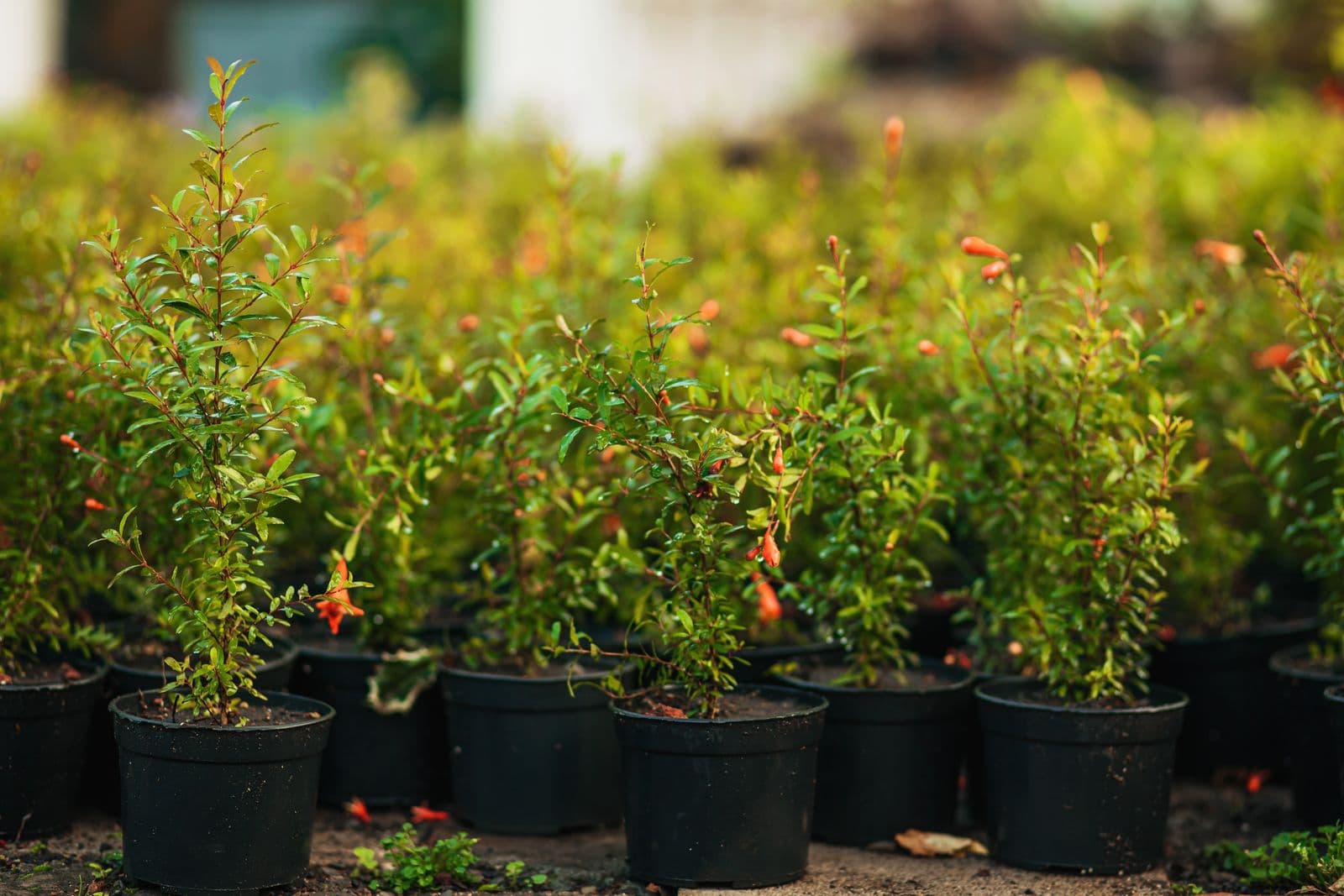
A polytunnel is the worst possible backdrop for the plants growing inside it. Everything behind your subject is the same green, at the same brightness, with the same leaf shapes. A hedge, a stack of trays, a row of 3-litre pots: all of it gives the eye — and any cutout — nothing to separate. That is why nursery photos so often look like a wall of foliage with a price underneath.
Two other problems recur. Customers misjudge size, because "2 litre" and "#1 container" mean nothing outside the trade. And glossy leaves shot in midday sun blow out to flat white patches that read as holes once the plant is on a clean background.
None of this needs a studio. It needs a staging spot, a fixed shot list, one honest scale cue, and the same background on every plant.
Build one staging spot and bring the plants to it
Do not photograph plants where they grow. Pick one place — a bench against a plain rendered wall by the loading door — and carry stock to it.
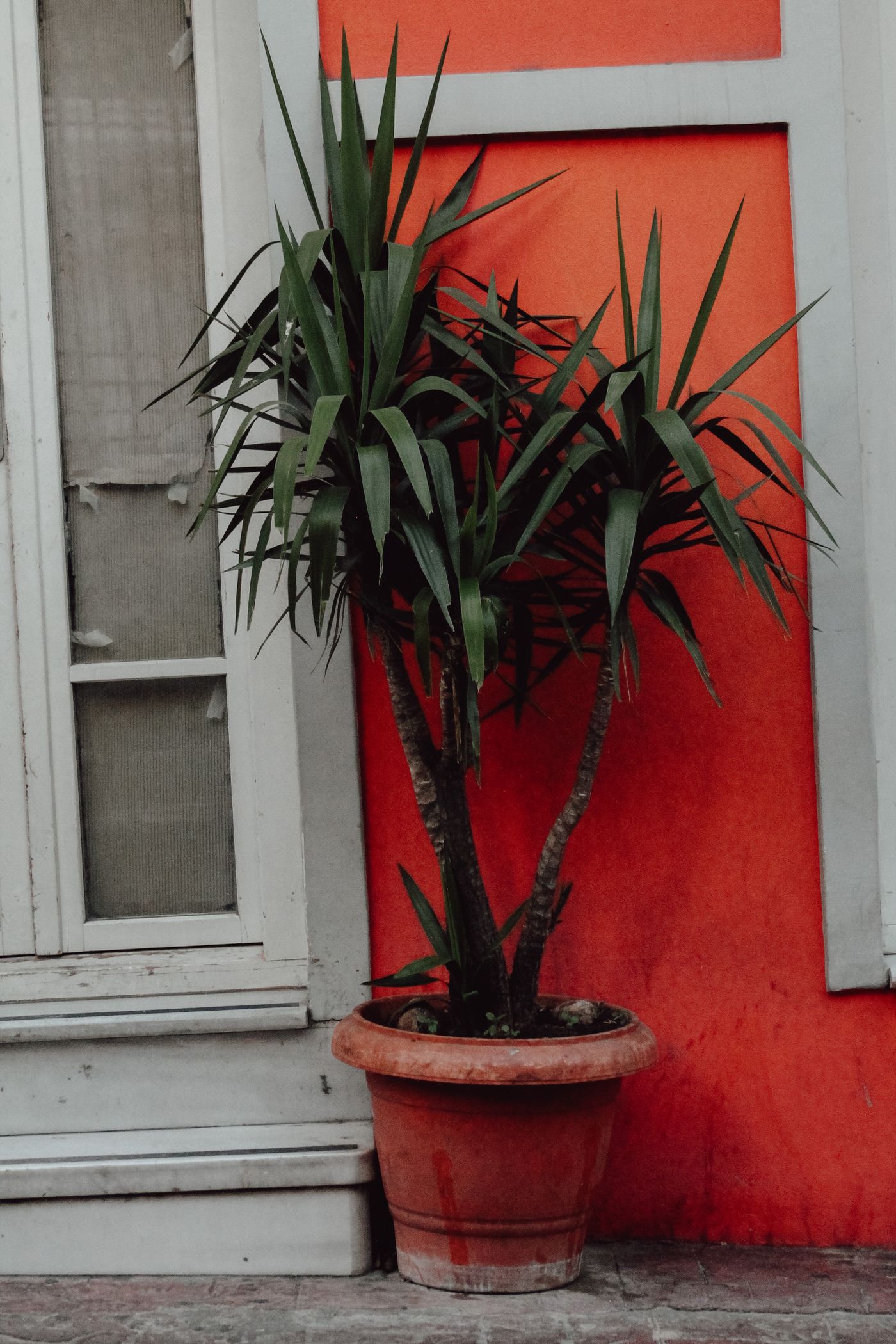
Behind the plant you want an unpatterned surface in a tone that differs from the foliage. A white or mid-grey board curved from wall to bench covers anything up to about a metre; for bigger shrubs a plain wall is enough. Avoid gravel, weed matting and mesh: the repeating texture becomes speckled edges around the leaf margins.
Light matters more than the camera. Overcast is ideal, open shade next best — the side of a building that stays out of sun all day. Avoid dappled light through shade cloth or canopy: mottled patches across one leaf make its edge unreadable. Wind is the other thief: brace tall pots with a stake out of frame, keep the shutter at 1/250s or faster, and work in a doorway.
Glossy leaves need cloud, not sun
Camellia, Fatsia, Monstera, holly — anything with a waxy cuticle mirrors the sky straight back into the lens. In direct sun whole leaves blow out to pure white, and no edit brings that detail back — it was never recorded.
Shoot these under cloud, in open shade, or early and late in the day. If you must shoot in sun, rotate the pot so leaf faces are not angled squarely between sun and camera, and check a few leaves zoomed in. Matte foliage — lavender, stachys, conifers — forgives harder light.
The three shots every plant listing needs
Work the same sequence every time so nothing is missed on a busy potting day.
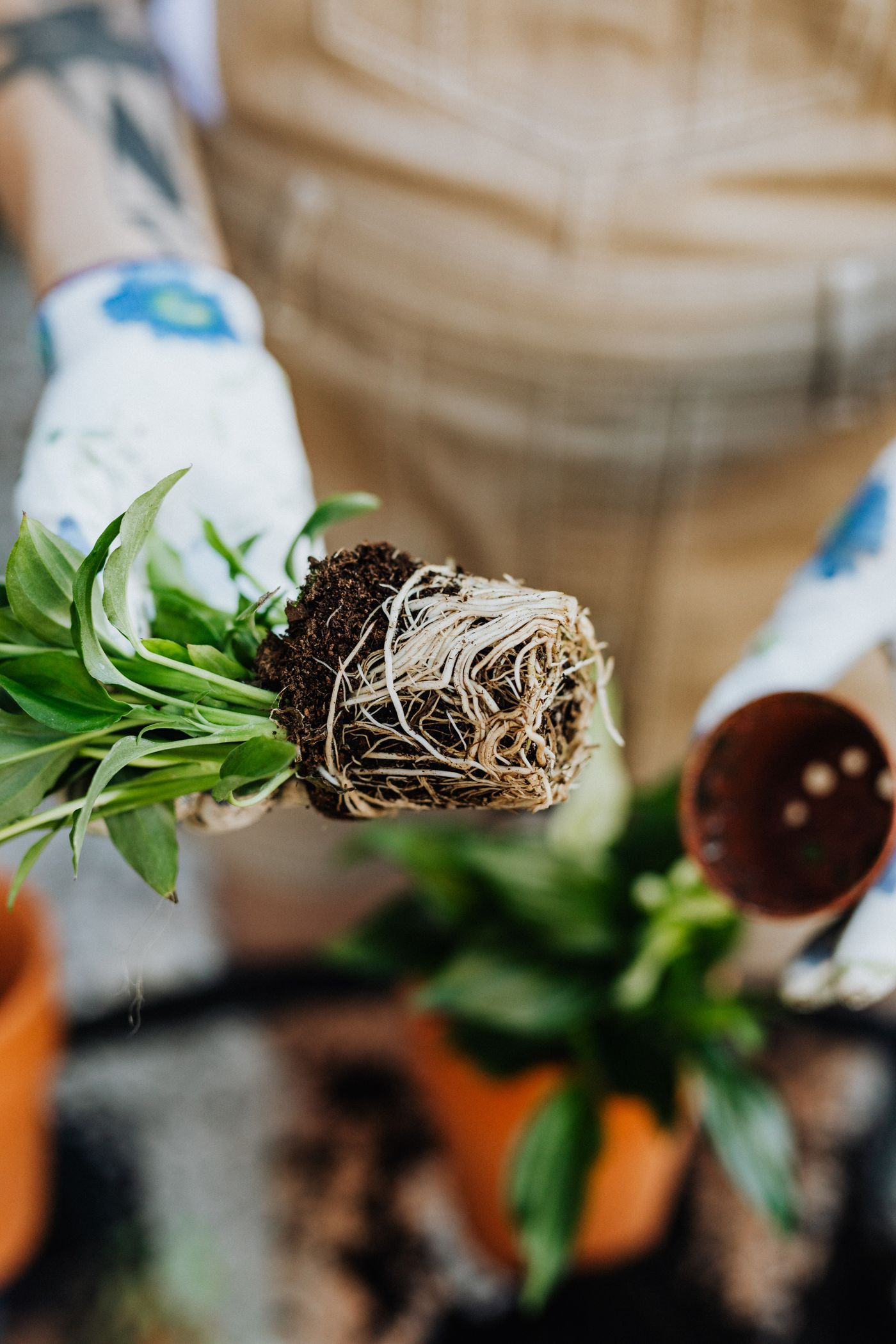
- The whole plant, camera at mid-plant height, not looking down, best side to the lens, label turned away if it carries another supplier's branding — branded and plant-breeders'-rights varieties often carry labelling and advertising rules.
- A detail shot of what the customer is actually buying: variegation, new growth, flower, berry, bark, scented foliage held in a hand.
- The pot and root shot — the container beside the plant, or the root ball for bare-root and rootballed stock, so grade is visible rather than promised.
Only the hero gets the background treatment; leave the other two alone.
Give customers something they can measure
Pot terminology does not travel. In the UK and Europe sizes are usually quoted in litres, and small pots are often named by width instead — a P9 is trade shorthand for a 9 x 9 cm square pot. In North America the container number is a nominal trade size covering a volume range, not a liquid measure: a typical #1 "trade gallon" holds about three quarters of a US gallon, nearer three quarts than four. Conventions differ by supplier, so check the spec sheet or ANSI Z60.2, the 2025 American Standard for Nursery Stock that replaced Z60.1, and give the pot width next to the litre size. None of it tells a first-time buyer how tall the plant will look on their patio.
So put a known object in one frame: a 30 cm rule stood in the pot, a hand on the rim. It costs one shot and heads off the "large shrub arrived at knee height" complaint.
One background across the whole availability grid
Run each hero shot through remover.bg and set the same background every time: plain white, a soft neutral, or your own brand colour. Add a drop shadow so the pot sits on a surface instead of floating — the same shadow technique that grounds any product shot. Upload JPEG, PNG or WebP under the 25 MB cap; export PNG when you want a transparent cutout for a catalogue layout.
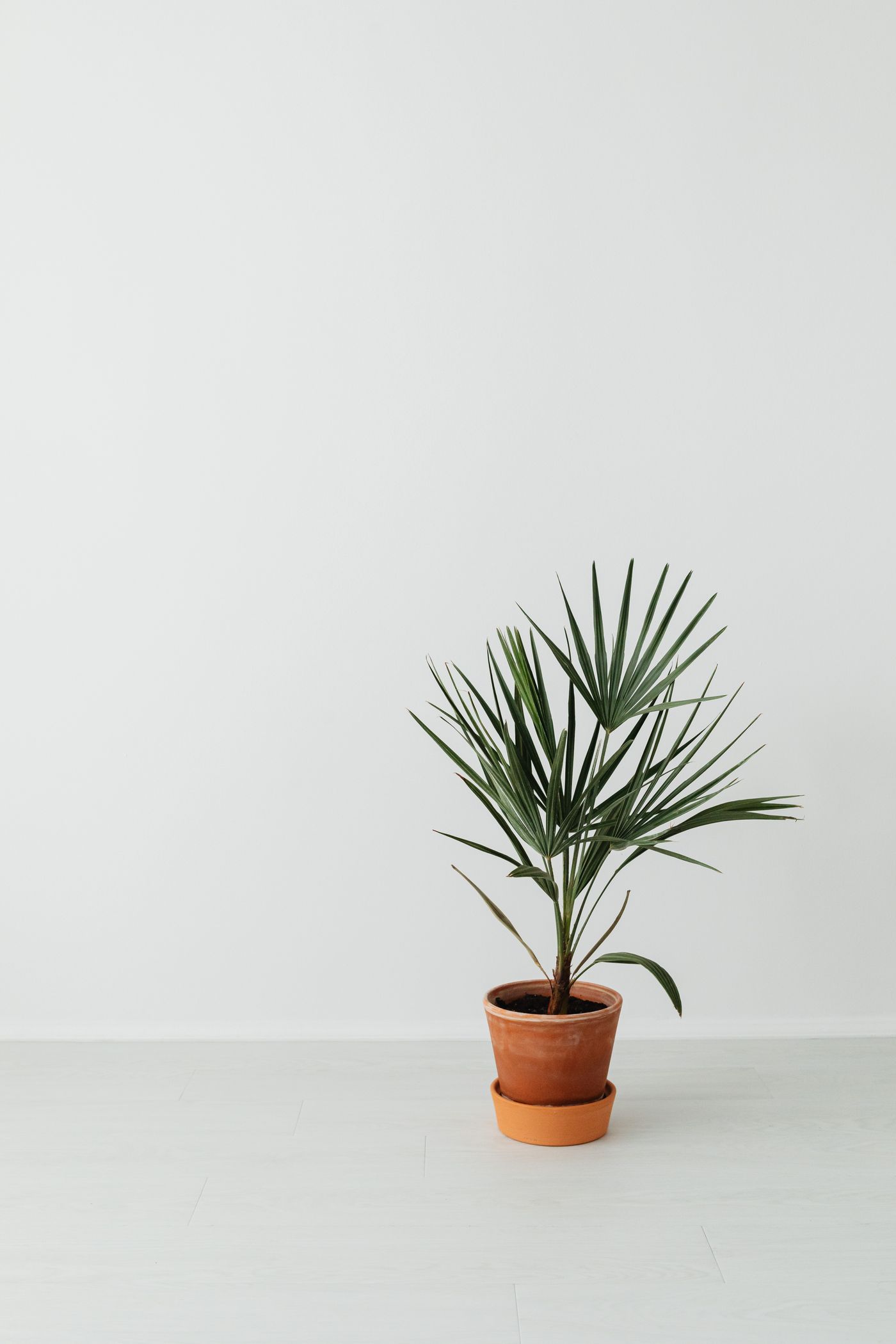
The payoff is seasonal. February stock shot under grey light sits beside June stock on the same availability page, and the different yards and skies behind them widen the mismatch. One shared background removes half of that; the light on the plant still differs, which is why you shoot under cloud every time. That consistency is why custom backgrounds have taken over product photography and why growers on Etsy get more from a consistent shop grid. For hundreds of lines, run them through the background removal API instead.
Do it once, reuse it all season
Shoot each line when it comes into stock, name files by plant code, and one hero image carries the web listing, the email and the printed bench card. The plants change every few weeks. The background should not.