 English
 Español
 Português (BR)
 Deutsch
 Français
 Italiano
 Türkçe
 Bahasa Indonesia
 Русский
 日本語
日本語 한국어
한국어 Українська
 Tiếng Việt
 Polski
 Nederlands
 ไทย
ไทย Română
 简体中文
简体中文 繁體中文
繁體中文 العربية
 Български
 Filipino
 हिन्दी
 اردو
اردو বাংলা
বাংলাBackdrop Materials: Paper vs Vinyl vs Fabric
Paper, vinyl and fabric backdrops each fail their own way: scuffs, glare, wrinkles. A buying guide rating them on how cleanly the subject separates from them.
- product photography
- backdrops
- seamless paper
- studio lighting
- background removal
- photography gear
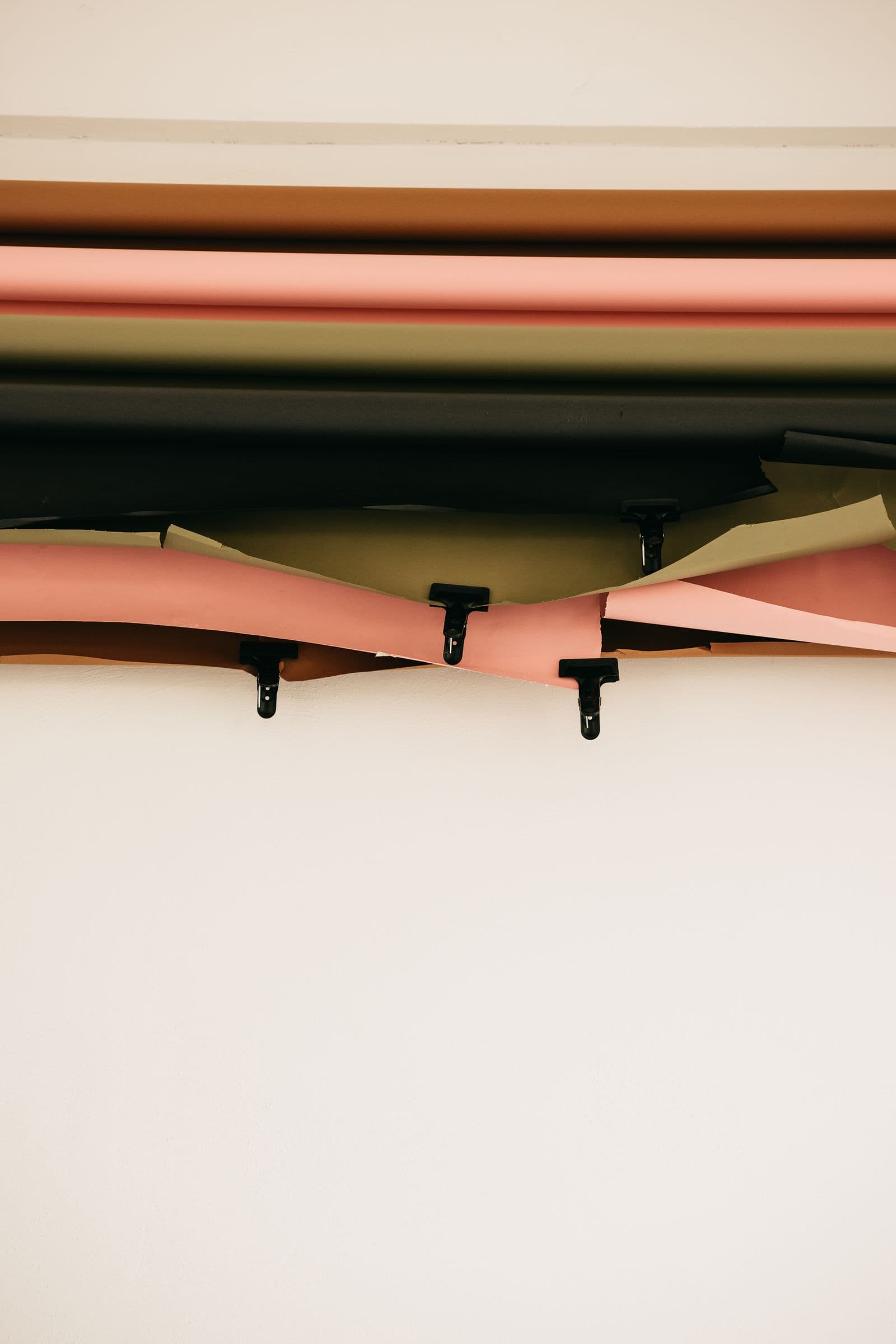
A backdrop has two jobs. The obvious one is looking good behind the subject. The one nobody shops for is letting go of it cleanly — giving the outline somewhere to end so a cutout doesn't chew into a shoulder or leave a grey fringe around a handle.
Most buying guides rate backdrops on colour range and price. This one rates paper, vinyl and fabric on separation: how each behaves when the background is going to be taken out. Each fails predictably, and once you know which failure you are buying you can shoot around it.
What "separates cleanly" actually means
Two things decide whether an edge survives. First, tonal difference: a dark grey bag on a dark grey sweep has almost no boundary. Second, structure — a backdrop carrying its own detail, whether weave, crease, scuff or reflection, puts lines in the frame that look like edges but belong to nothing. Matte, evenly lit and slightly contrasting is the target; materials differ in how hard they make it to hit.
Seamless paper: matte falloff, easily wrecked
Paper is the default for a reason. It is genuinely matte, so there is no specular highlight to chase, and it falls into shadow smoothly as it curves away. Savage lists the studio roll that fills most of its colour range at 107 inches by 36 feet. Savage lists its Pure White roll at 163 GSM and its black roll at 145 GSM — heavy enough either way to hold a sweep without buckling.
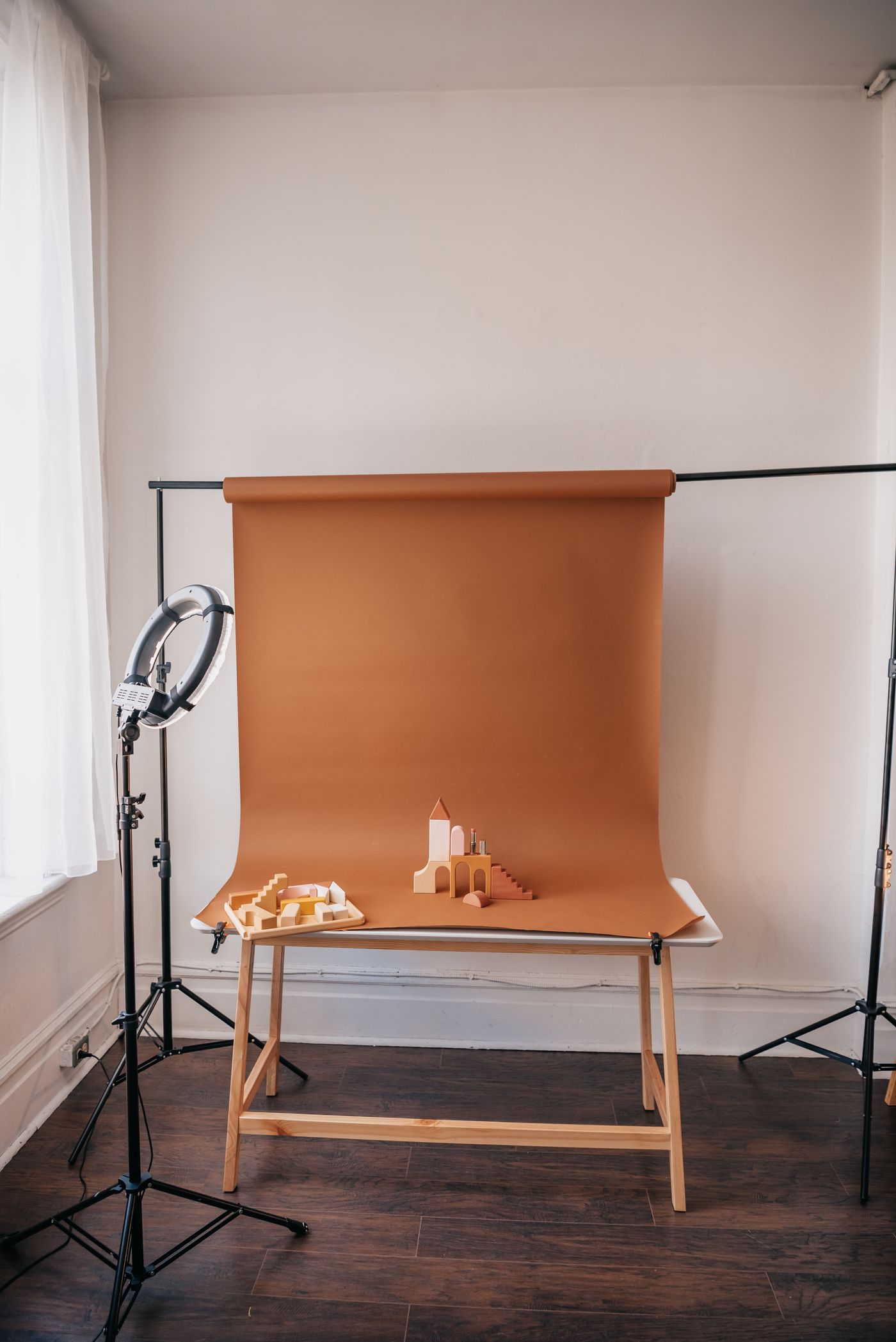
The penalty is durability. Paper scuffs the moment anything stands on it, drinks moisture from a damp floor and creases if the roll sags. Scuffs are survivable — pull down fresh paper and cut off the damage. Creases are the real problem: one catches light along its length as a bright line, and a bright line running parallel to the subject's edge is exactly the ambiguity you want to avoid.
Vinyl: wipe it clean, then fight the shine
Solid vinyl exists because paper scuffs. You can stand on it in shoes, wipe it with a damp cloth and use it the next day, so for heavy, wet or dirty subjects — boots, tools, plants — it pays for itself.

What you buy in exchange is reflectivity. Most vinyl has a satin or semi-gloss face, so a bare hard light produces a hotspot while the corners sit far darker. Worse, a glossy base reflects the product: a bottle comes with a faint upside-down copy attached, and that copy is neither subject nor obvious background, so an outline drawn around the bottle can swallow part of it.
Both problems share a fix: get the light off-axis and diffused, feathering it across the sweep rather than aiming into it, and check for a hotspot before shooting a range. Matte-finish vinyl avoids most of it. If you want the product grounded, cut it out and add the shadow deliberately — remover.bg drops the cutout onto a solid or custom colour and builds the shadow there, rather than inheriting whatever the floor threw back. This guide to realistic shadows covers placement.
Fabric: portable and forgiving, until you look closely
Muslin, canvas and wrinkle-resistant polyester travel well, cost little and go truly matte — a black cloth reads properly black, excellent behind pale subjects.
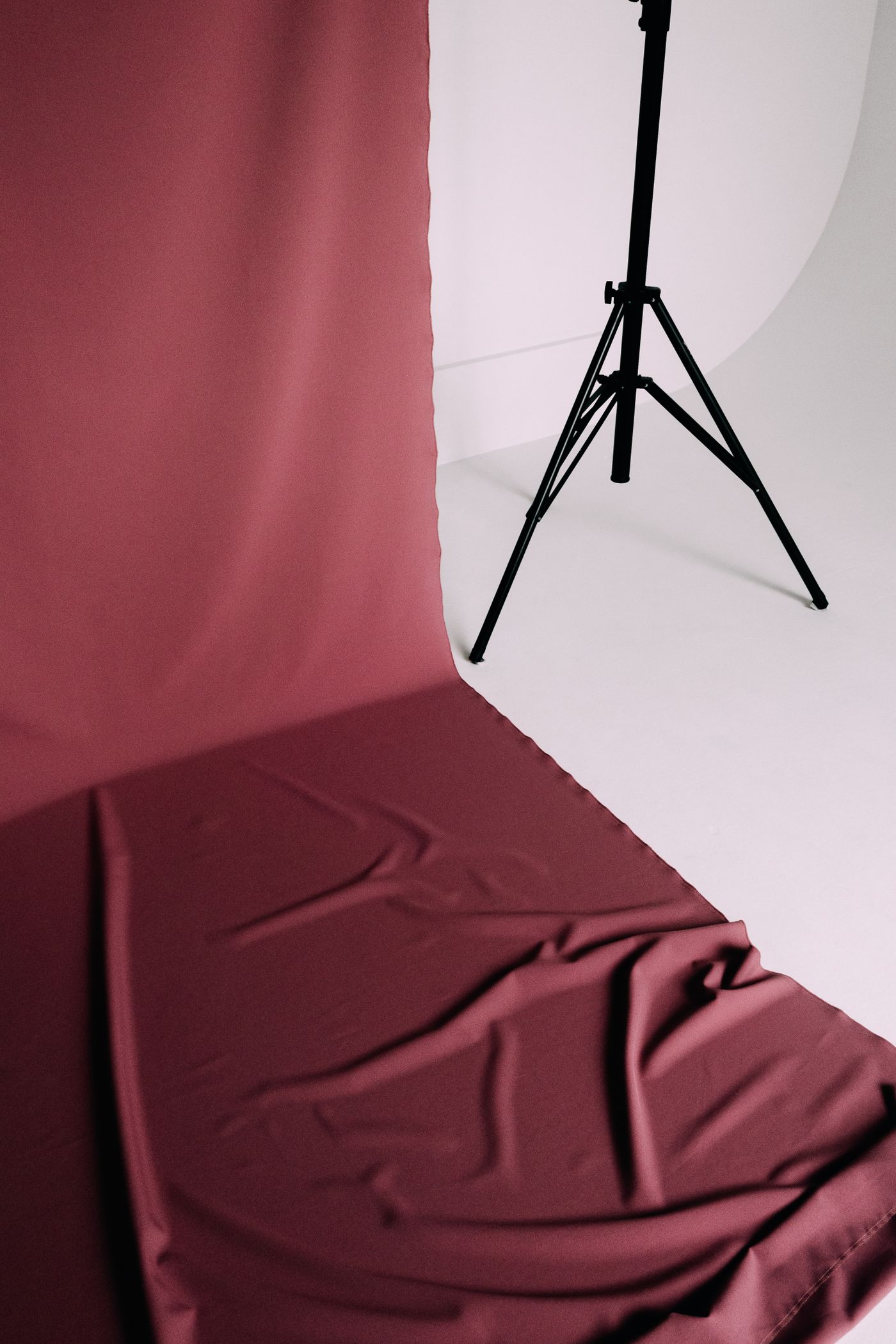
Then there is texture. Every wrinkle is a small shadow, and a field of small shadows behind a fine edge is noise. Lint and pet hair are worse: on dark fabric each pale fleck near the outline is a separate decision, and flecks against a fur or hair edge tend to survive the cut. Hang fabric a day early so it drops, steam rather than iron it, and lint-roll behind the subject.
Acrylic risers and glossy tabletops
White or black acrylic looks expensive, but it is a mirror by design. The reflection under a ring flatters a lifestyle shot and complicates a catalogue cutout: someone has to decide whether it belongs to the product. Shoot listing images on frosted acrylic or matte board and keep the mirrored version as a secondary shot — a trade-off this jewellery photography guide works through.
Size and storage
Width should cover the subject plus enough clear sweep either side that nothing touches the vertical part. Tabletop goods need less than people expect; wide rolls only pay off on full-length subjects. Depth matters more — pull the subject forward so its shadow lands behind it, not around its outline.
Storage decides whether it lasts. Savage's own advice is to stand paper rolls on end. A roll left on its side presses down on itself, the core loses its round shape, and the paper comes off with shallow waves that mean uneven light and soft lines reading as edges. Roll vinyl on a tube rather than folding it; a fold leaves a crease that is slow to relax, and some never go. Fabric is the one material that tolerates folding, provided you hang and steam it before the next shoot.
Which to buy first
For clean, dry, small items, paper is the cheapest route to a mask-friendly background. For heavy or messy subjects, buy matte vinyl and light it off-axis. Fabric earns its place when the backdrop travels. None of them is the final background anyway — separation is what you pay for, and swapping in a custom background turns one sweep into a whole catalogue.