 English
 Español
 Português (BR)
 Deutsch
 Français
 Italiano
 Türkçe
 Bahasa Indonesia
 Русский
 日本語
日本語 한국어
한국어 Українська
 Tiếng Việt
 Polski
 Nederlands
 ไทย
ไทย Română
 简体中文
简体中文 繁體中文
繁體中文 العربية
 Български
 Filipino
 हिन्दी
 اردو
اردو বাংলা
বাংলাAuction Lot Photos: A Routine for 300 Lots by Friday
Photograph 300 mixed auction lots by Friday: one table you never rebuild, four frames per lot, honest condition shots, one background for the whole catalogue.
- auction photography
- product photography
- catalogue images
- background removal
- antiques
- estate sales
- lighting
- workflow
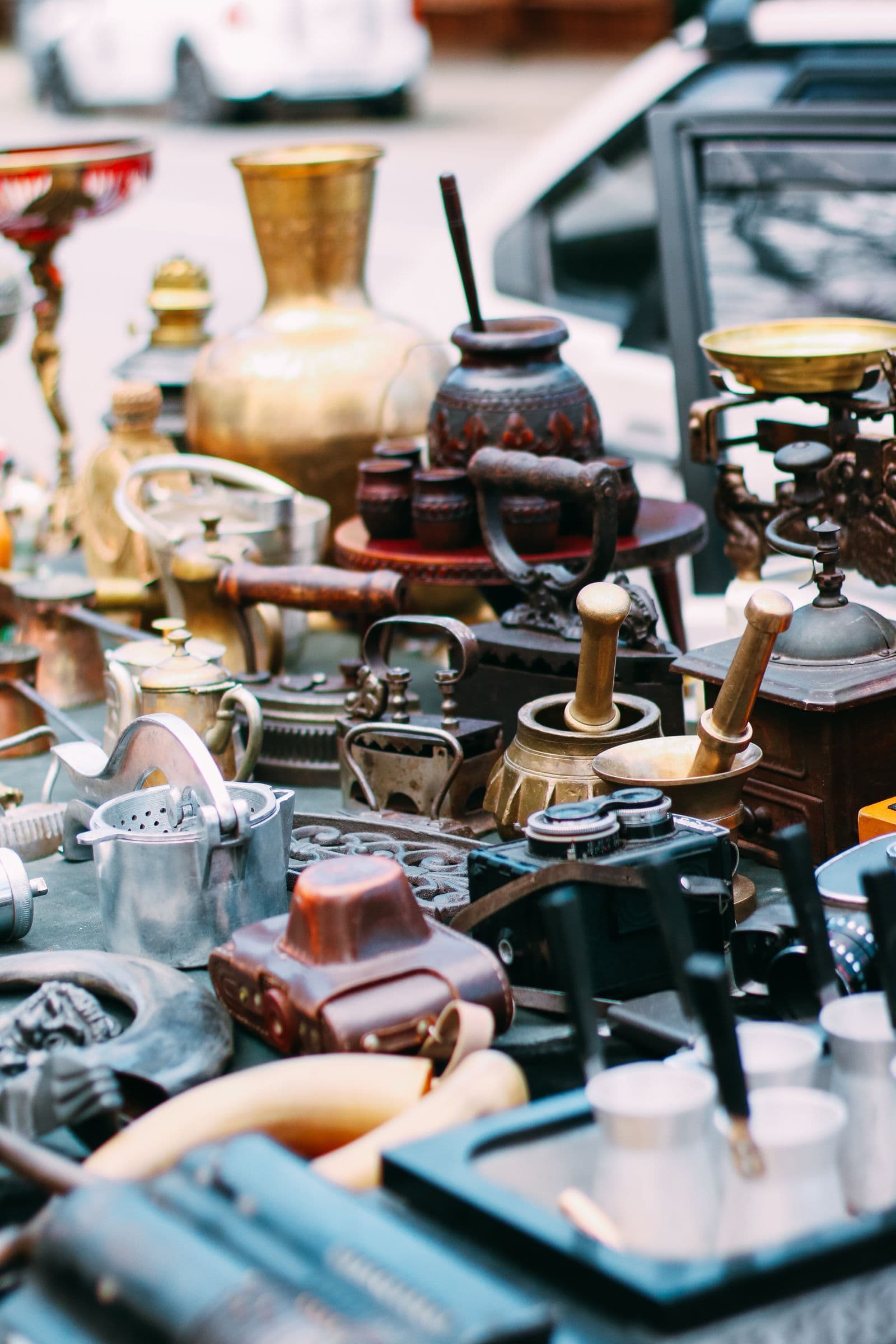
Three hundred lots arrive from a house clearance on Tuesday. The catalogue has to be live by Friday so bidders get a weekend to browse it. Between those two dates sits one person, a folding table and a camera.
The mix is what makes it hard. A single estate consignment hands you a porcelain figurine, a boxed set of spanners, an unframed oil, a tray of costume jewellery and a brass carriage clock in ten minutes. Shoot them all like the figurine and the spanners look like scrap; shoot them all like the spanners and the figurine loses its glaze.
The routine below is built for that volume: one table you never rebuild, one shot list you never deviate from, one background across the whole sale — so a bidder scrolling two hundred thumbnails sees a saleroom, not a warehouse aisle.
Build the table once, then stop touching it
Give the camera a permanent corner. Table against a wall, a roll of paper curved from wall to tabletop, two lights at roughly forty-five degrees with the key softened through a diffuser. Camera on a tripod at fixed height, gaffer tape so lot 41 lands where lot 40 sat.
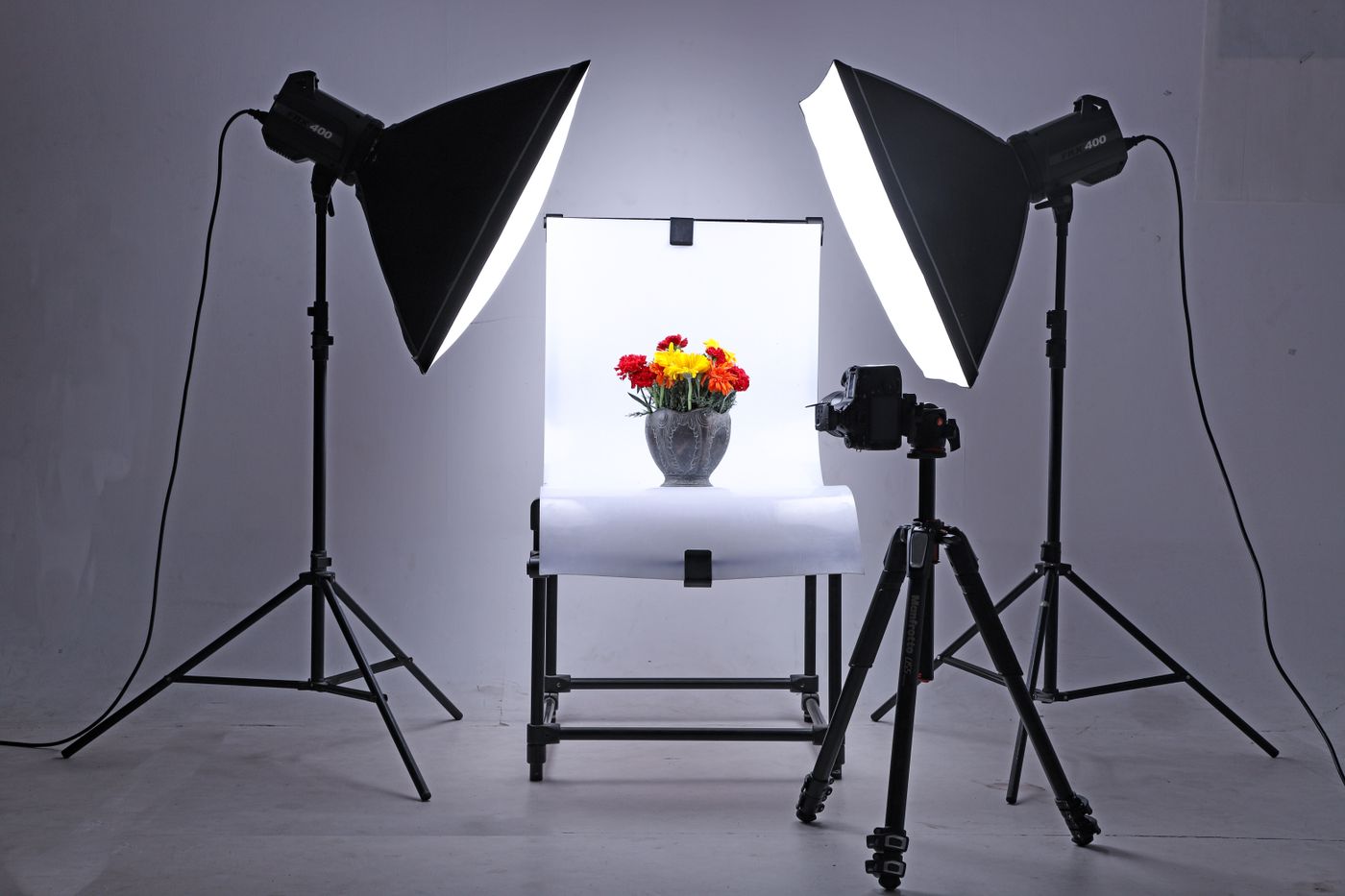
Lock the settings and leave them locked. Manual exposure, f/8 so a clock face and its feet are both sharp, lowest usable ISO, fixed white balance set from a grey card under your lights. Auto white balance drifts warm on a copper kettle and cool on a white plate, and by lot 90 nothing matches. Place, shoot the sequence, remove, place the next.
The four frames every lot needs
Bidding platforms let you attach several images to a lot, comfortably more than the four below. Check your platform's current image guide first.
- The hero. The whole lot, three-quarter view for anything with depth, square-on for flat work.
- The mark. Backstamp, hallmark, signature, edition number, serial plate. The frame that turns "Continental porcelain figure" into a named attribution.
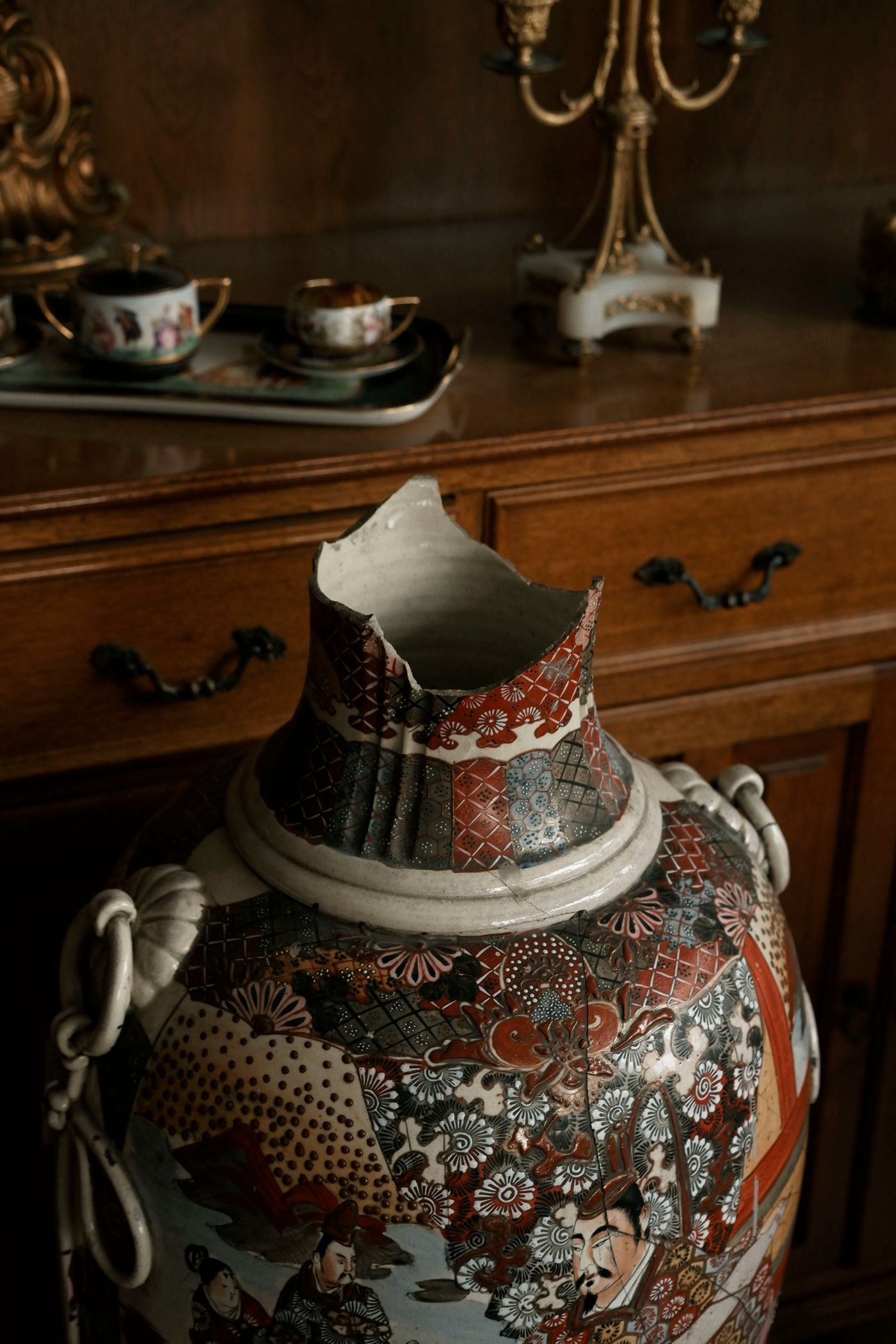
- The damage. Every chip, hairline, crack, old restoration, veneer lift and missing finial. Shoot it deliberately and light it so it reads.
- The scale. A ruler in frame, or the object beside something universally understood. Bidders routinely misjudge size from a photograph, and auction lots do not come with a return right — a lot that arrives smaller than imagined becomes a complaint, a dispute, or a buyer who simply refuses to pay.
The damage frame pays for itself: a bidder who sees the hairline before bidding rarely opens a dispute after the invoice.
Multi-item lots: let bidders count
A box lot of fourteen pieces of Wedgwood loses money photographed in the box. Tip it out, lay everything on the table in a grid with no overlap, face up, and shoot straight down. Take a second at an angle so shapes read.
Make the count in the frame match the count in the description. Un-stack the plates, unfold the linen, open the canteen of cutlery. Small silver, chains and loose stones are their own problem; the framing in our jewellery photography guide applies to a tray lot.
One background for porcelain, oils, tools and jewellery
Even with a fixed table the backdrop betrays you: the paper scuffs, a crease shows behind lot 88, the strip lights read differently at 4pm than at 9am. Cut each hero frame off its background and put every lot in the sale on the same one.
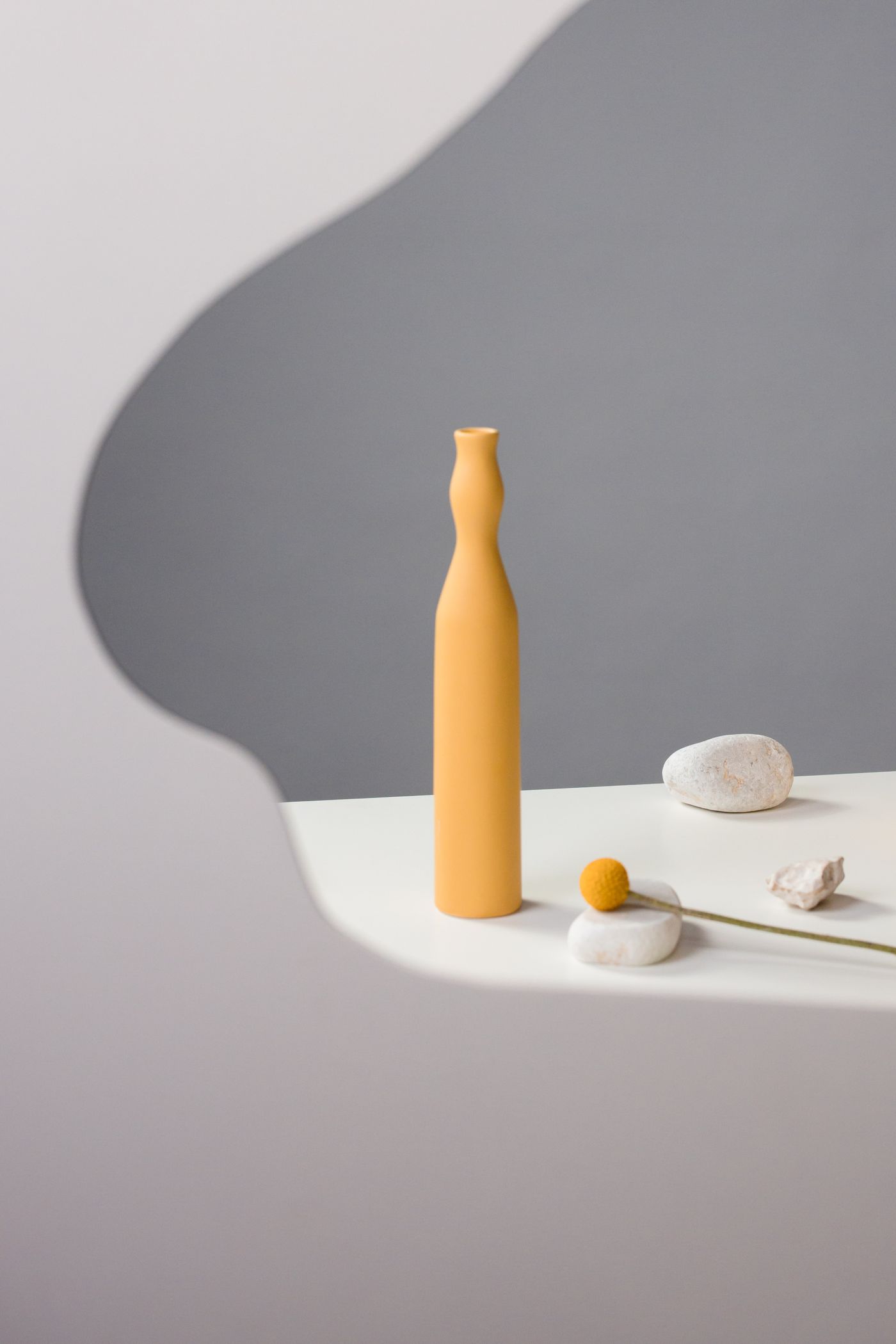
Choose that background for the difficult items. Pure white looks clean until a white porcelain plate dissolves into it; a light neutral grey holds the edge on white ceramics, polished silver and pale glass, and still sits quietly behind a dark oil. Add a soft contact shadow so the object rests on a surface instead of hovering — our guide to realistic shadows covers how much reads as convincing.
Fine detail separates a catalogue from an obvious cutout. Chains, wicker, shaving-brush bristles and rug fringe are exactly the edges that turn into a hard outline. remover.bg is built for those, runs in the browser or on a phone in the saleroom, and takes PNG, JPEG or WebP up to 25 MB.
Get the files right for the bidding platform
Export JPEG — LiveAuctioneers requires .jpg, caps each file at 1.5 MB (and rejects anything under 15 KB), and recommends a maximum of 1100 pixels wide, which is the size that lets the zoom viewer work. Set width and file weight in your phone's photo editor or design tool before upload.
Then name every file so the lot number in it matches the catalogue exactly, followed by an underscore and the image number: 41_1.jpg, 41_2.jpg, and 53A_1.jpg for a suffixed lot. Bulk ingestion runs off that convention, and one mis-numbered file attaches a Georgian silver salver to a lot of garden tools.
LiveAuctioneers also bars URLs, email addresses, contact details and watermarks inside the image, so resist stamping the house logo across the hero. At several hundred lots a week, the background removal API suits a nightly job better than a person clicking.
Where the cleaning stops
Replace the background on the hero. Leave the condition frames exactly as shot. As a working rule, changing what sits behind a lot is presentation; changing the lot itself is not. Where that line falls legally depends on your platform's image policy and the misdescription rules where you trade, so check both and state your editing policy in your terms.