 English
 Español
 Português (BR)
 Deutsch
 Français
 Italiano
 Türkçe
 Bahasa Indonesia
 Русский
 日本語
日本語 한국어
한국어 Українська
 Tiếng Việt
 Polski
 Nederlands
 ไทย
ไทย Română
 简体中文
简体中文 繁體中文
繁體中文 العربية
 Български
 Filipino
 हिन्दी
 اردو
اردو বাংলা
বাংলাPhotographing Bicycles for Resale: Spokes and Backgrounds
A bicycle is mostly holes, and every gap between the spokes shows your driveway. Set the backdrop, stand the bike straight, and shoot the angles buyers scroll.
- bicycle photography
- product photography
- background removal
- resale listings
- ebay
- used bikes
- spokes
- photo backdrop
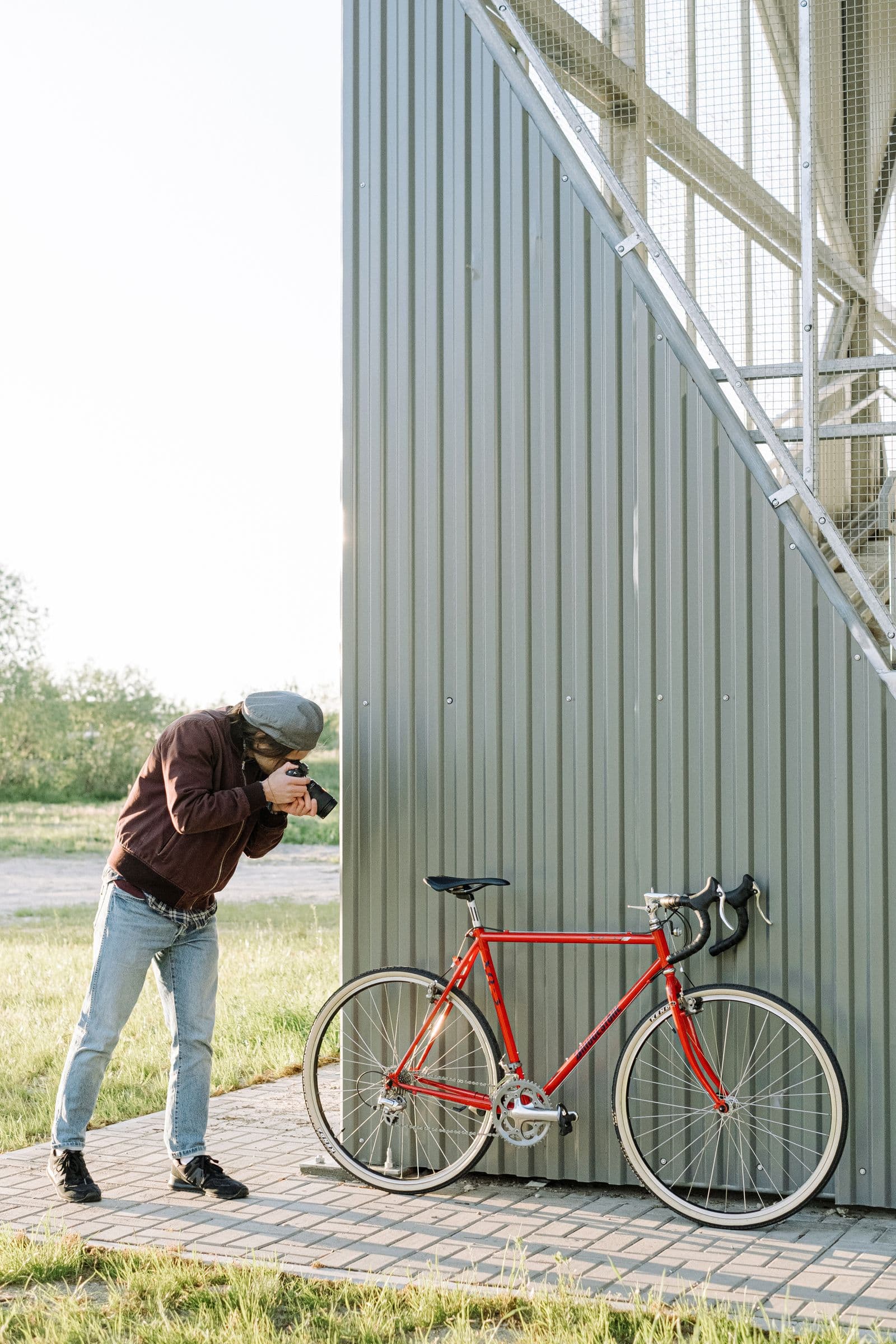
A bicycle is mostly holes. Between the spokes, inside the frame triangle and along every cable run there is more background visible than bike — dozens of separate windows onto whatever stands behind it, each one judged separately.
The failures are easy to spot: a wedge of driveway inside the rear triangle, a stripe of block paving glowing through the spokes while the rest of the background went white. Both trace back to the two minutes spent setting the bike up outside without thinking about what was behind the wheels. Here is the routine that avoids it.
What a bike does to a cutout
Spokes are the hard part. They are thin, they repeat, and thirty-odd of them cross a single circle of background — twice that across the whole bike. Separation means deciding which side of each hair-thin wire you are on, thirty-odd times per wheel: easy when the background behind the rim is one even tone, hard when it is textured or striped with light.
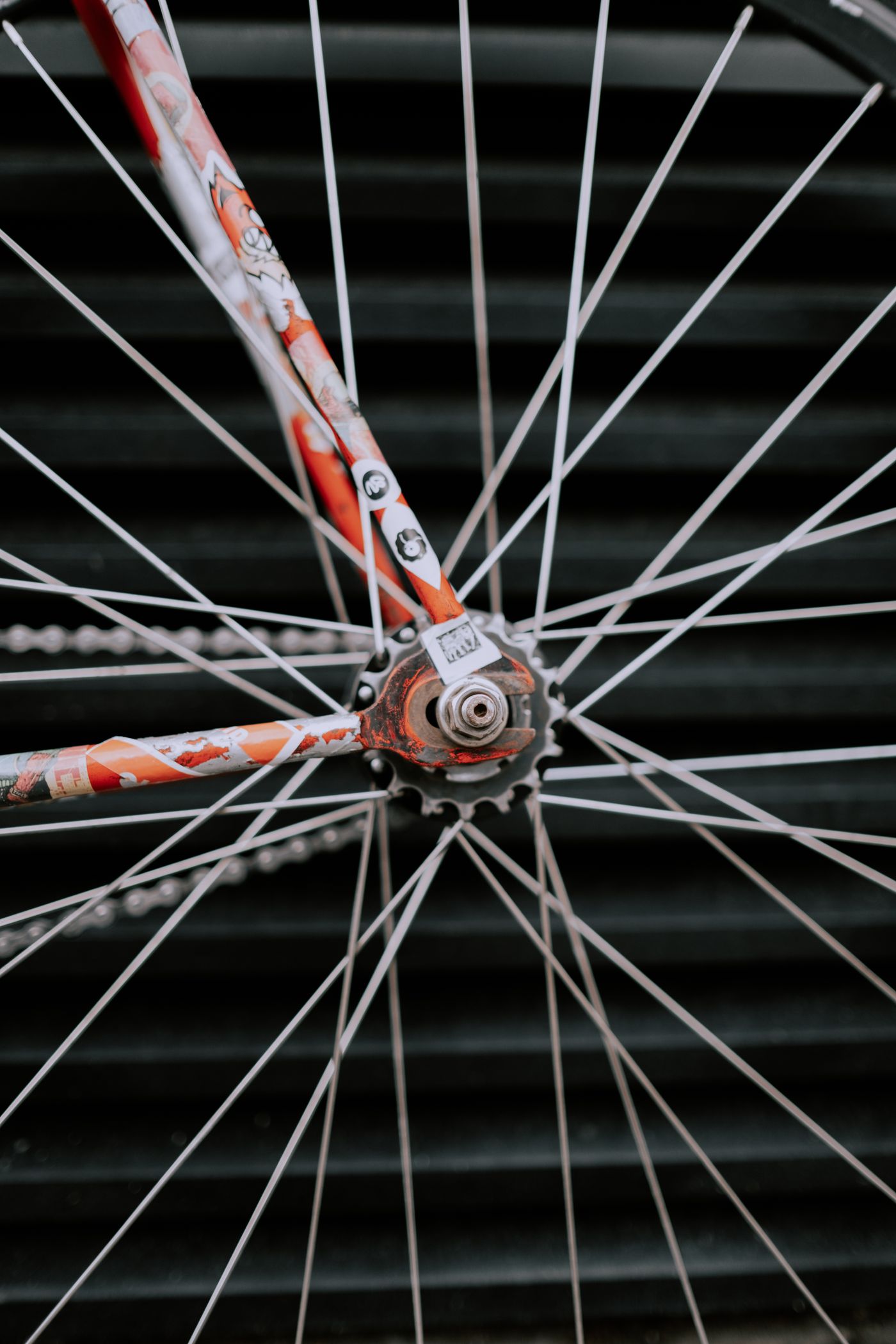
So one rule governs the rest: whatever shows through the wheels must look like whatever sits beside them. Block paving, decking, a kerb behind the tyres — each gives the wheel interior a texture the exterior lacks.
Pick the ground, the wall and the light
Find a plain surface that runs from behind the bike down to under the wheels. A closed pale garage door is the best free backdrop most people own: roll it down, park the bike a metre in front, and the background becomes one panel. Paper swept along the floor does the same.
Light it flat. Overcast daylight or open shade is ideal; direct sun throws a hard shadow of every spoke onto the ground inside the wheel, a striped pattern no edge detector can resolve. Keep the bike far enough forward that its own shadow lands behind it. The same reasoning drives good car photography: a big soft light and a boring background beat any amount of fixing afterwards.
Stand the bike up instead of leaning it
Leaning a bike on a wall turns the bars, tilts the frame and pastes its shadow across your backdrop. Use a rear-wheel display stand, or a floor stand that grips the axle and hides behind the tyre. A brick tucked behind the rear tyre works too.
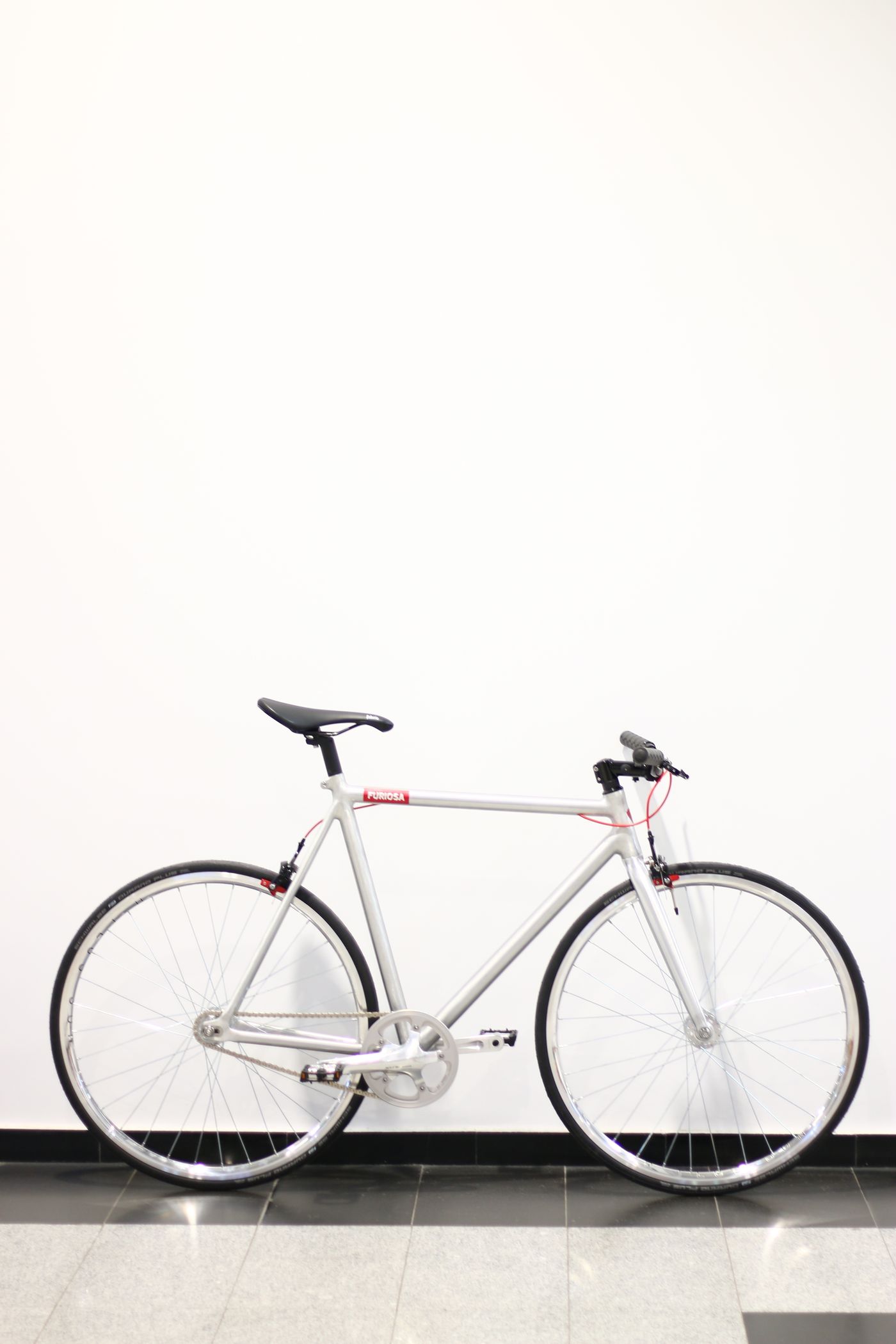
Then set the bike the way every catalogue does, every time:
- Drive side, chainrings and cassette, facing the camera
- Cranks horizontal, drive-side arm pointing forward
- Front wheel straight or turned a few degrees toward the lens
- Valve stems in the same position on both wheels
- Tyre logos and hub labels upright
Camera height, distance and sharp spokes
Shoot from chest height, level with the bike, so the top tube stays straight and the wheels stay round. Stand back further than feels natural and zoom in; close and wide balloons the near wheel.
On a camera, something around f/8 usually holds both wheels and the drivetrain sharp — check the near crank and the far rim at 100% and stop down if either is soft. On a phone, leave portrait mode off: it invents its own subject outline and blurs across spokes and cables, so you start with a soft, half-guessed edge.
The shot list buyers scroll
eBay allows plenty of photos per listing; its help pages give the current limit for your category and country. Use as many as the bike's condition justifies. Shoot the full drive side and non-drive side first, then the details that pre-empt questions: cassette and chainring teeth, pad or rotor wear, the cockpit from above, tyre tread, every chip and scratch, and, optionally, the serial number under the bottom bracket.
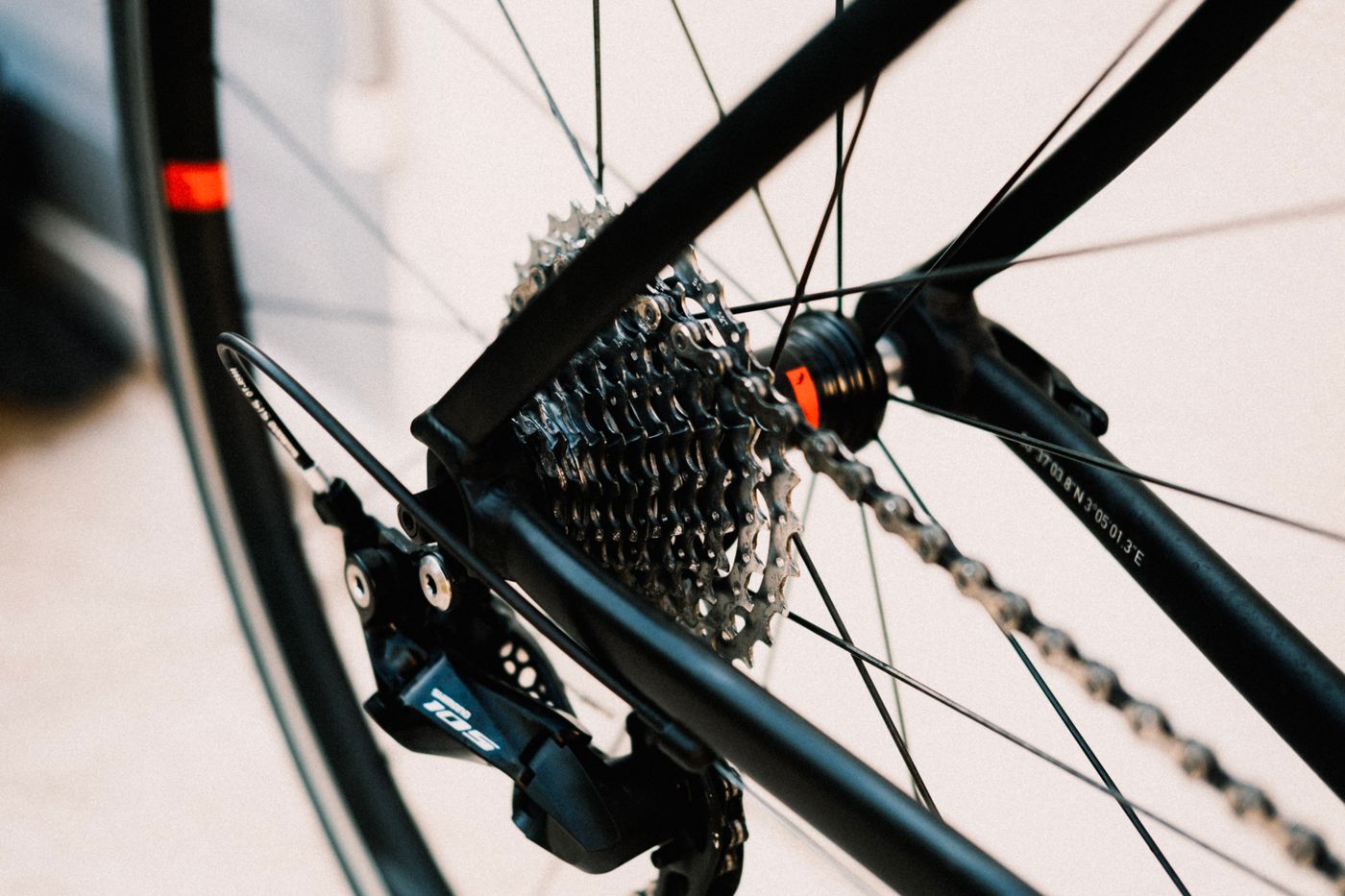
Think about that last one: whether the serial belongs in a public listing is a judgement call, and registries differ on it. Bike Index, which runs a searchable serial database, treats serial search as central to what it does and wants numbers shared and looked up. Check what your own registry or police force advises before you post one.
Only the two profile shots are worth putting on a new background; an untouched close-up of a worn cassette builds more buyer confidence than a tidied one.
Cutting it out cleanly
Send the drive-side frame to remover.bg, then check the wheels first: through the spokes, then the fork crown, rear triangle and cable runs. Switching the background to a mid-tone colour makes this easy — fragments hide against white and jump out against grey. If anything survives inside a wheel, the fix is upstream: reshoot that frame against a plainer, more evenly lit backdrop.
Put it back on a plain colour and add a realistic drop shadow so the bike stands on something instead of floating. Shadows read differently on a bike than on a boxy product, with only two small contact points; the thinking behind believable shadows is worth a read first. If you need transparency instead, export a transparent PNG. PNG, JPEG and WebP are accepted up to 25 MB, and a shop clearing a trade-in rack can automate the same job with the API.
Before you list
Drive side against something plain, bike standing straight, sun off the backdrop, portrait mode off. Do that and the cutout is a thirty-second step, not a repair job — and a page of used stock stops looking like fifteen different driveways.